The StG 44 (Sturmgewehr 44, literally "storm or assault") rifle (model of 1944") was an assault rifle developed in Nazi Germany during World War II that was the first of its kind to see major deployment and is considered by many historians to be the first modern assault rifle. It is also known under the designations MP 43 and MP 44 (Maschinenpistole 43, Maschinenpistole 44 respectively), which denote earlier development versions of the same weapon with some differences like a different butt end, muzzle nut, shape of the front sight base or with an unstepped barrel, all only visible with close inspection.
StG 44 (Sturmgewehr 44)
Luger
PPK
Smith & Wesson M1869 .45 Schofield Revolver
Colt .45 1873 Peacemaker Revolver - Long Barrel
Colt .45 1873 Peacemaker Revolver
Schmeisser MP41 SMG
The MP41 submachine gun was produced by a firm called Haenel. Hugo Schmeisser who was their chief weapon’s designer, wished to create a new SMG by merging the action of the MP40 with a timber stock. It also had a select fire capability for single shot or automatic fire.
The MP41 was used mostly by the Romanian Army as well as some specialised Luftwaffe units and the SS. According to some sources it was popular with field units of the infamous Sicherheitdienst (SD) of Reinhardt Heidrich.
The MP41 was used throughout the war, albeit in small numbers. There are rare photographs of the MP41 being used by German units throughout the war and also falling into Soviet hands.
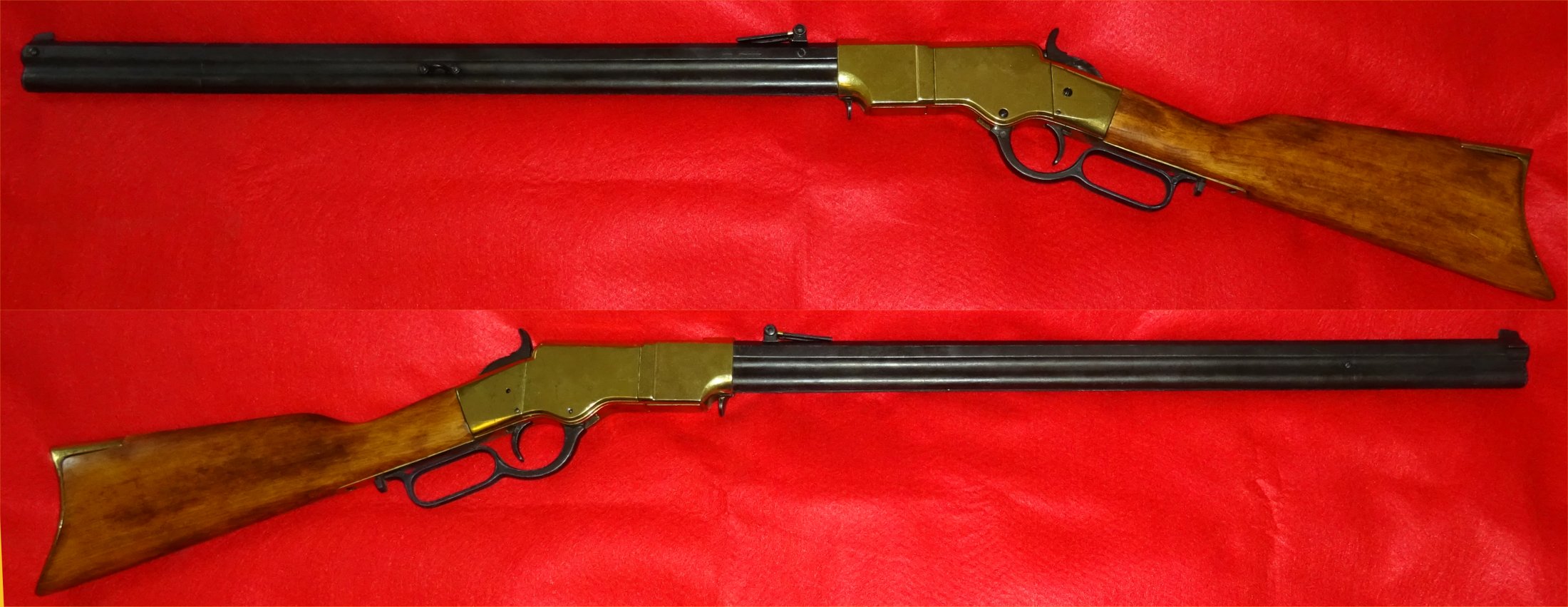
Henry Rifle (American Civil War) .44 Lever Action Repeating Rifle
P38
Colt .44 1860 Army Percussion Revolver
Russian PPSH-41 Submachine
The PPSH-41 is a Soviet submachine gun designed by Georgi Shpagin as a cheap, simplified machine gun. It was a favourite weapon for the Germans to capture and re-use on the Eastern Front during World War II.
The PPSh saw extensive combat use during World War II and the Korean War. It was one of the major infantry weapons of the Soviet Armed Forces during World War II. More than five million PPSh submachine guns were produced by the end of the war. The Soviets would often equip platoons and sometimes entire companies with the weapon, giving them excellent short-range firepower.er.
PM - Soviet Makarov
American M3 Grease Gun
Sten Mk IIS 9 mm silenced sub-machine gun
Schmeisser MP40 SMG
AKM Bayonet type II
East German made Kalashnikov AKM Type 2 bayonet with scabbard and hanger, designed to fit the Russian Kalashnikov AKM assault rifle.
The bayonet can also be used as a wire-cutter, when the blade is engaged with the scabbard.
The Type 2, which came out in the mid-1960s, was an improvement on the earlier Type 1. It has a steel pommel, a fully plastic scabbard and a leather belt hanger.
This is a matching numbers example (knife & scabbard)
Colt .45 M1911A1
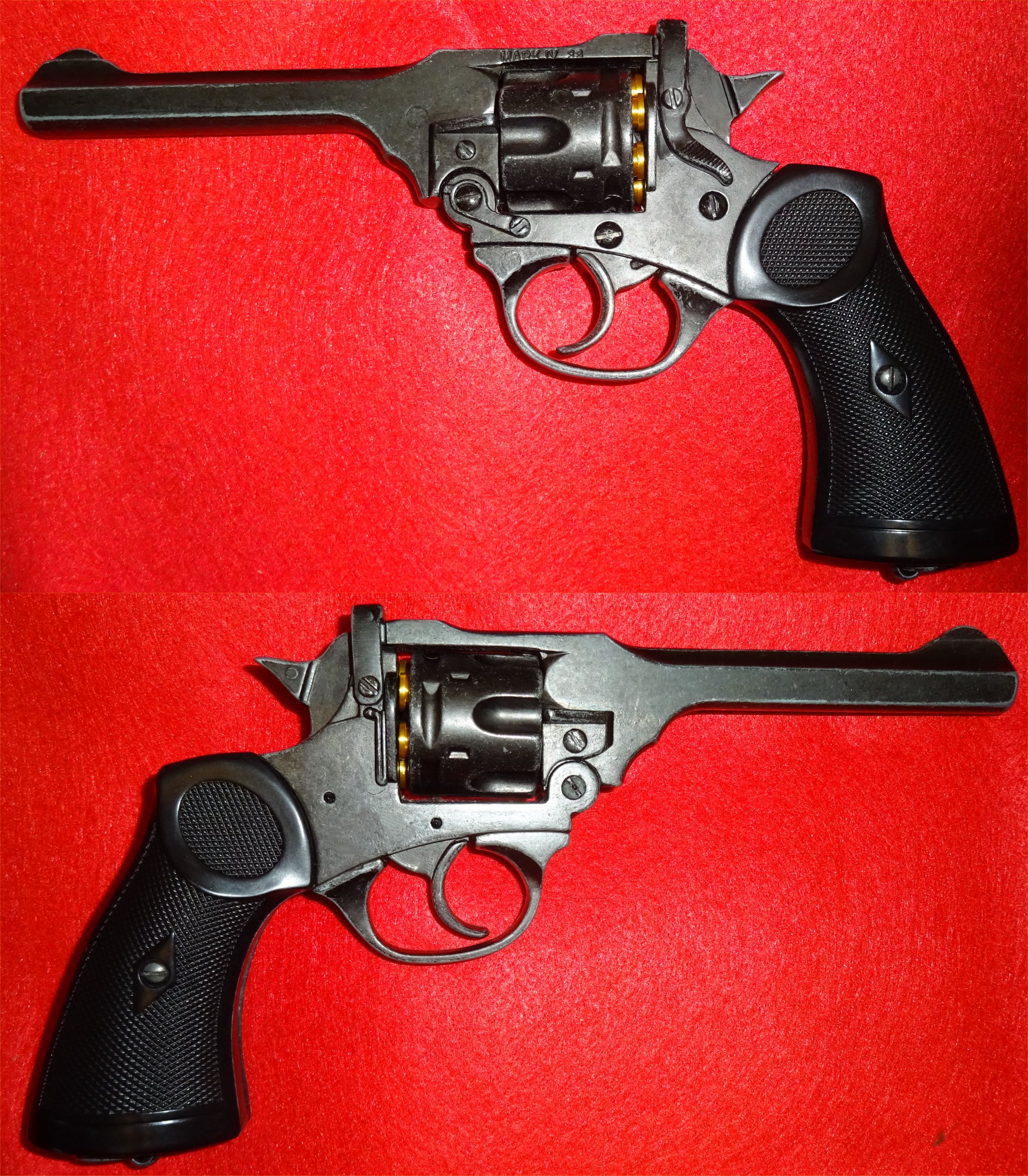
Webley Mk.IV .38
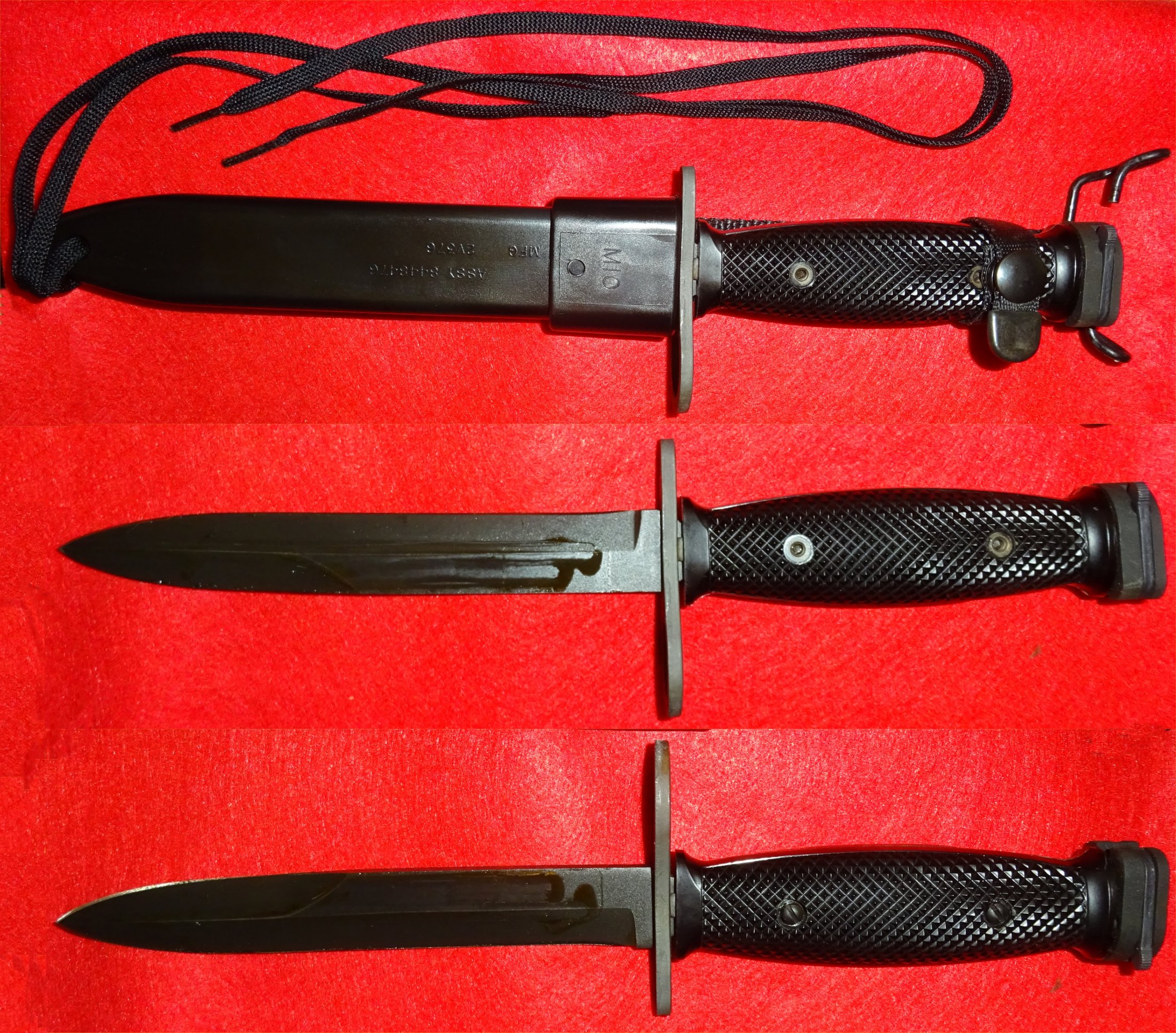
USA M7 Bayonet in M10 Scabbard
This M7 Bayonet was issued by the U.S. Military and was made in the USA, manufactured by the Ontario Knife Company.
This M7 Bayonet is NSN# 1095-00-017-9701, it comes with a M10 scabbard and has a 6.5" blade.
The M7 was issued for use with the M16/AR15 Assault Rifle or M4 Carbine and was produced from 1964 onwards.
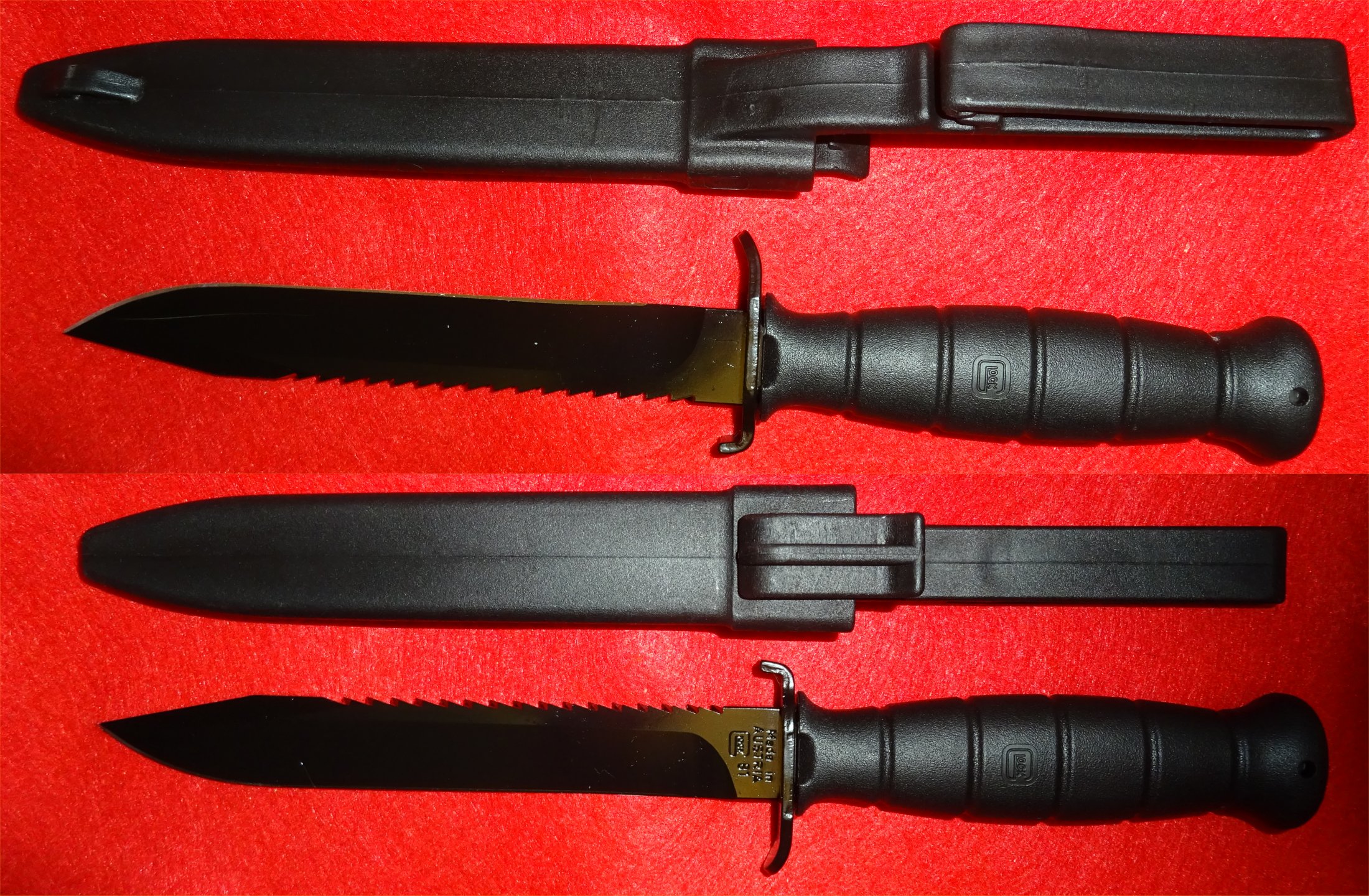
Glock FM81 Combat/Survival Knife
The Glock FM81 has a Polymer grip and sheath, with a 6.5" Spring steel HRC ~ 55, electrophoretic coated blade with Saw.
Developed in 1975 in cooperation with the Austrian special units Jagdkommando, it is the official fighting knife of the Austrian army.
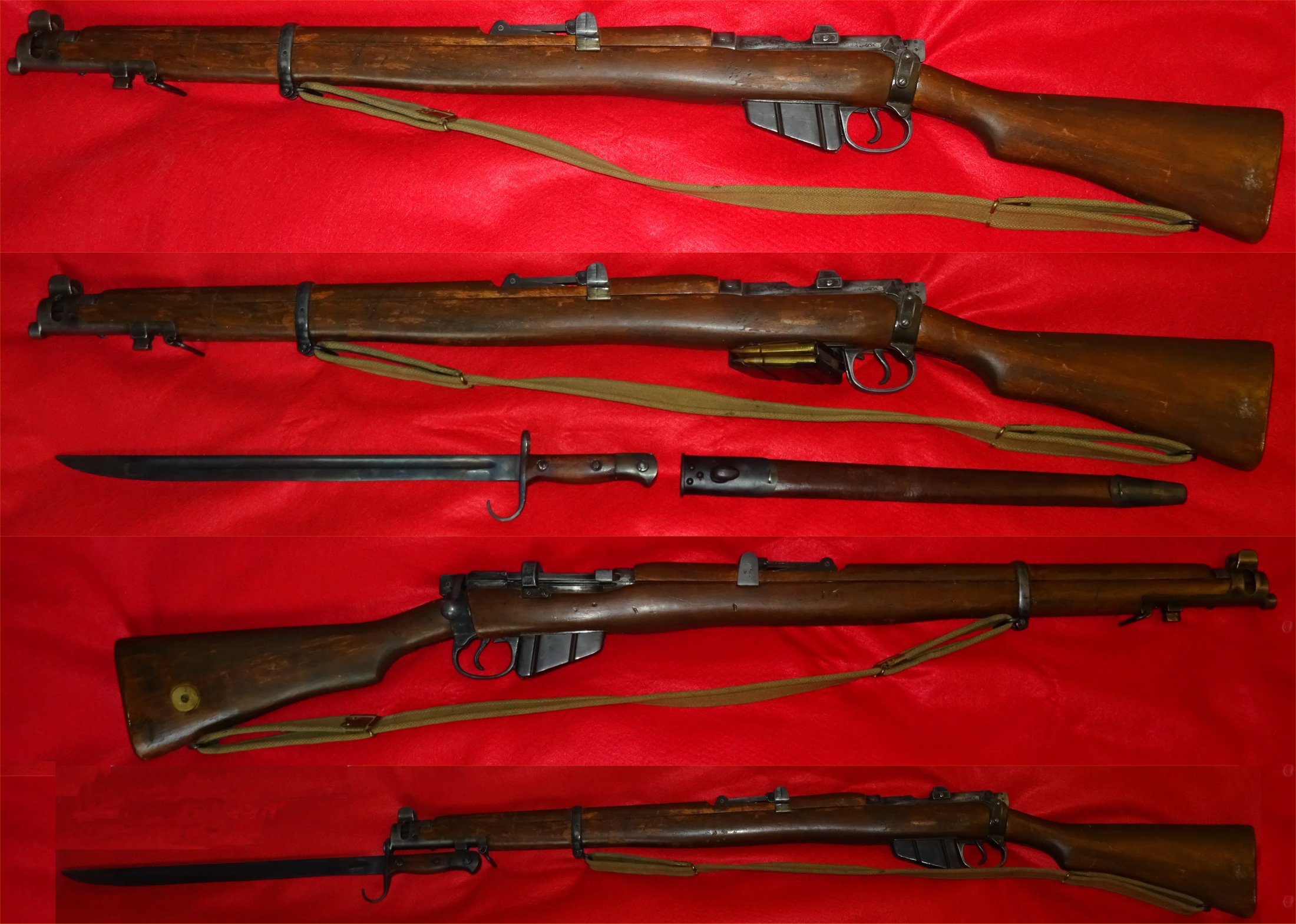
No1 SMLE Lee Enfield .303 Rifle
The No1 Lee Enfield is a bolt action magazine fed rifle that served as the main weapon of the British Empire during the first half of the 20th century, and was the British Army’s standard rifle from its adoption in 1895 until the mid 1940’s.
The WWI versions are often referred to as the "SMLE", which is short for the common "Short, Magazine, Lee–Enfield" variant.
The Lee–Enfield takes its name from the designer of the rifle's bolt system James LEE and the factory in which it was designed Royal Small arms Factory in Enfield